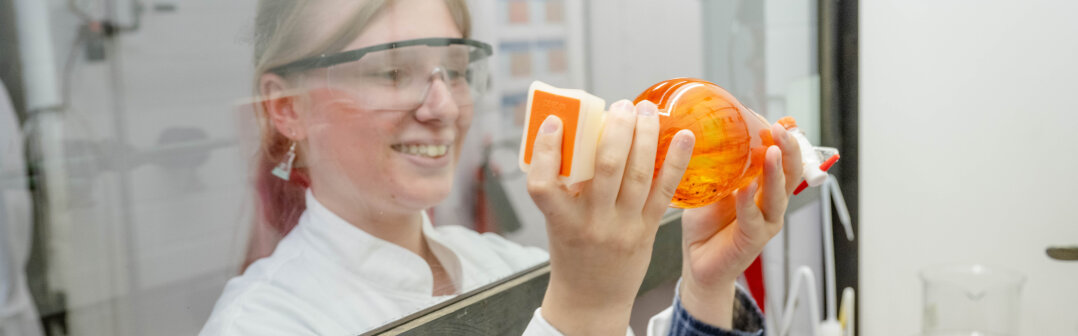
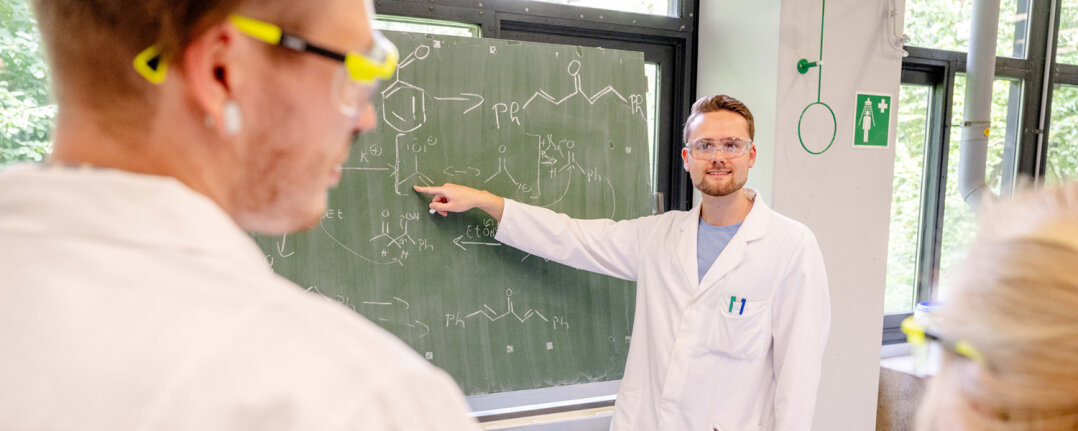
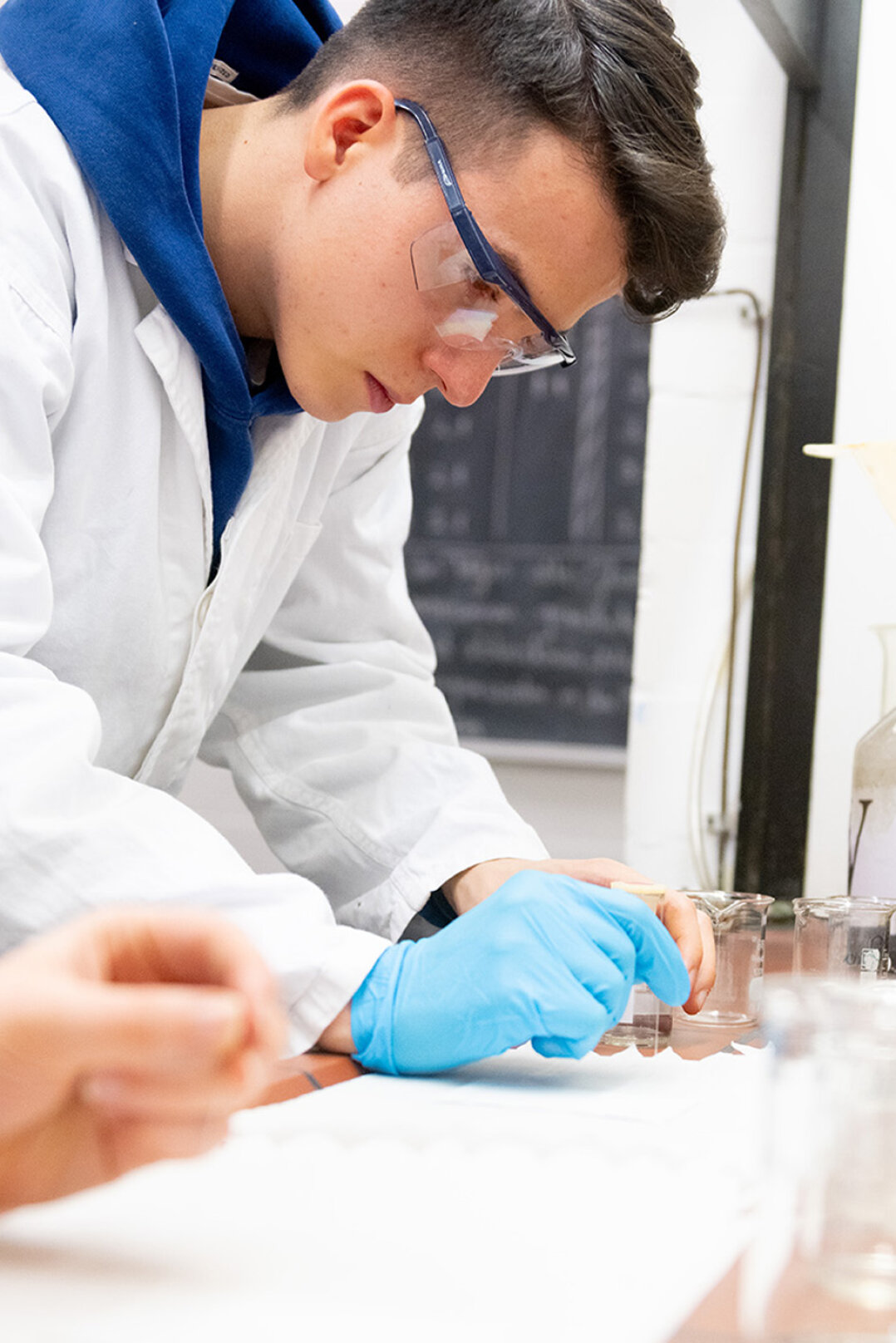
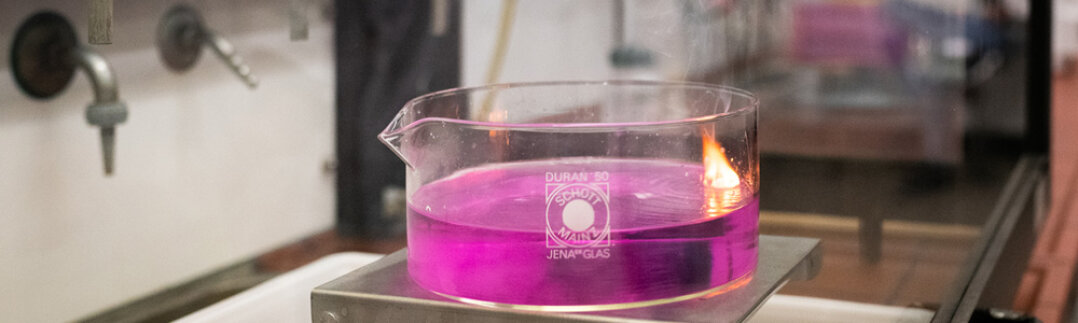
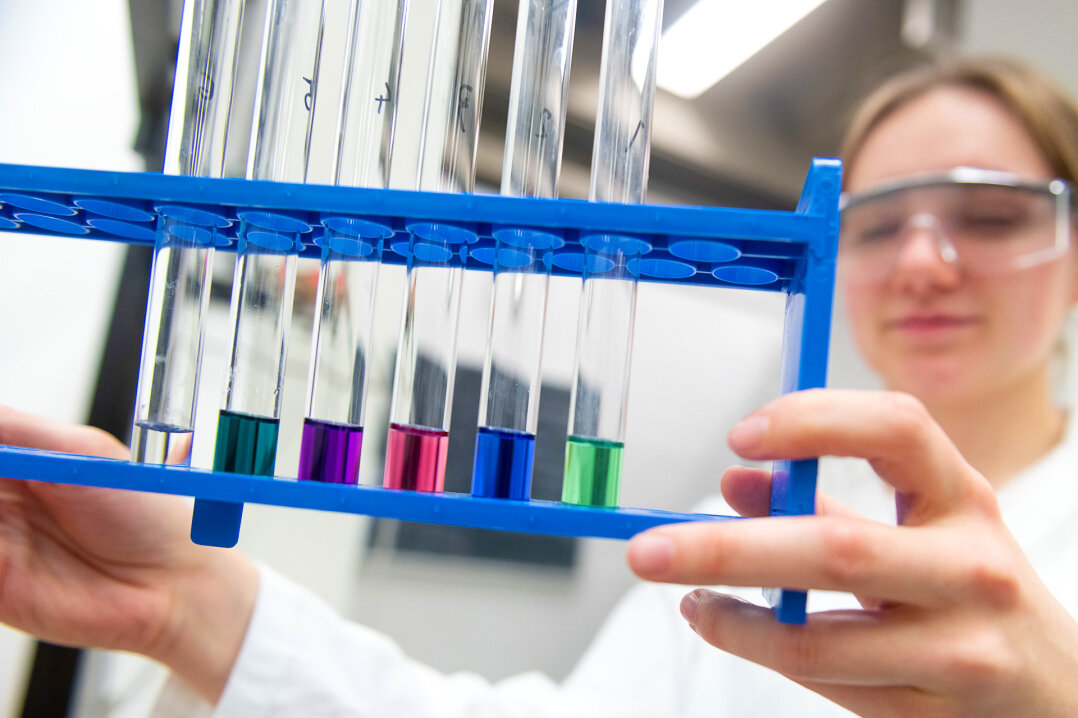
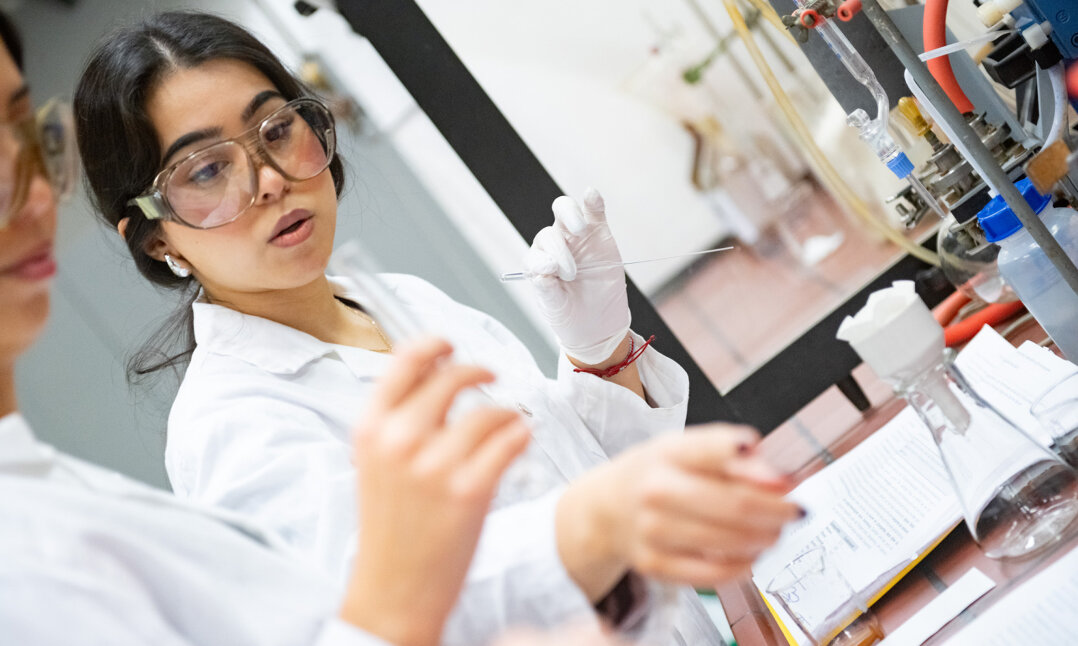
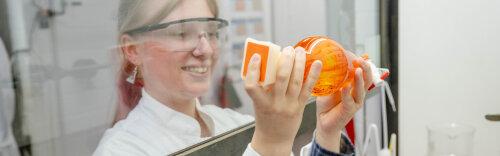
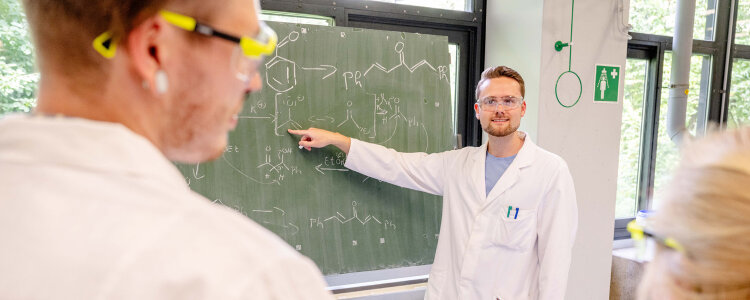
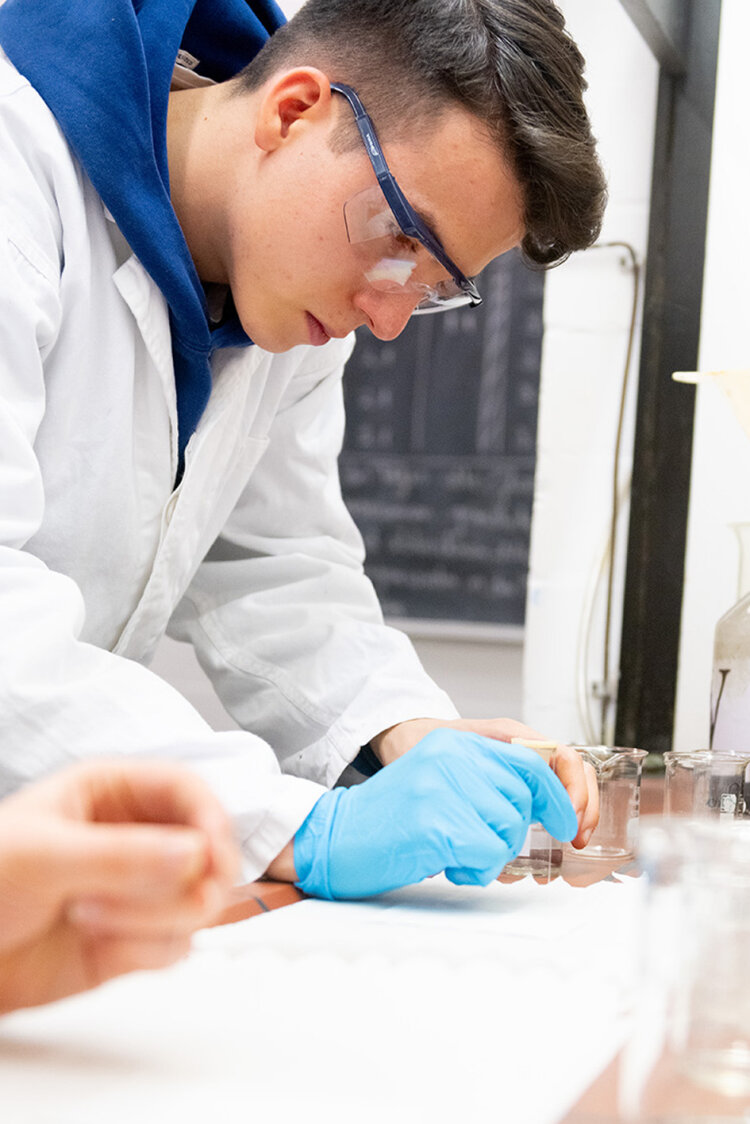
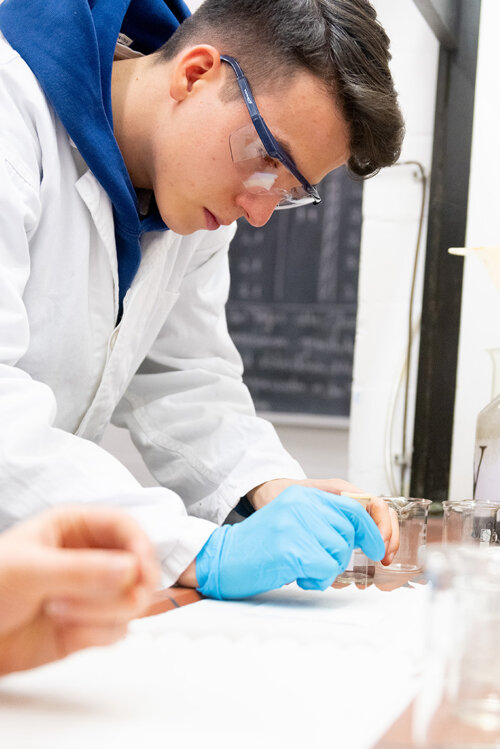
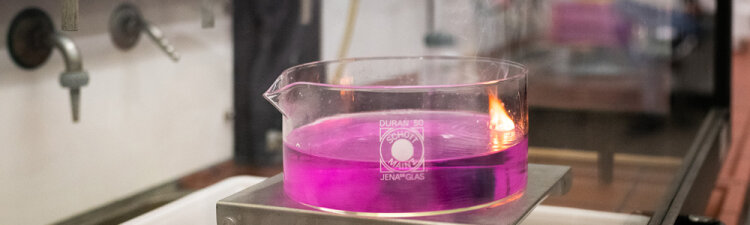
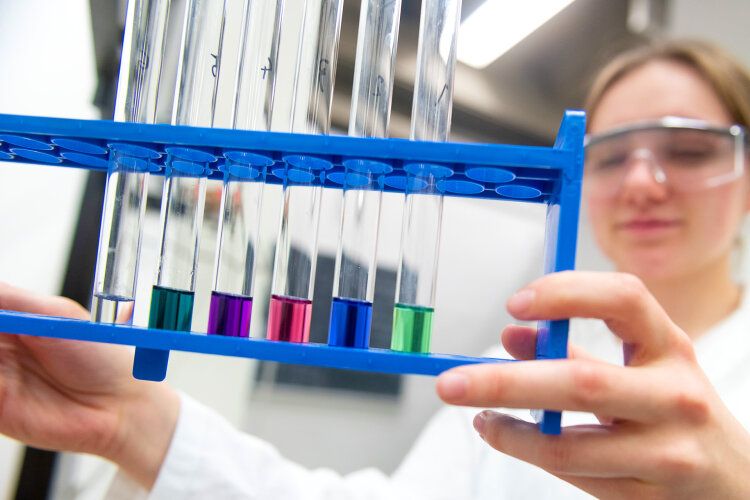
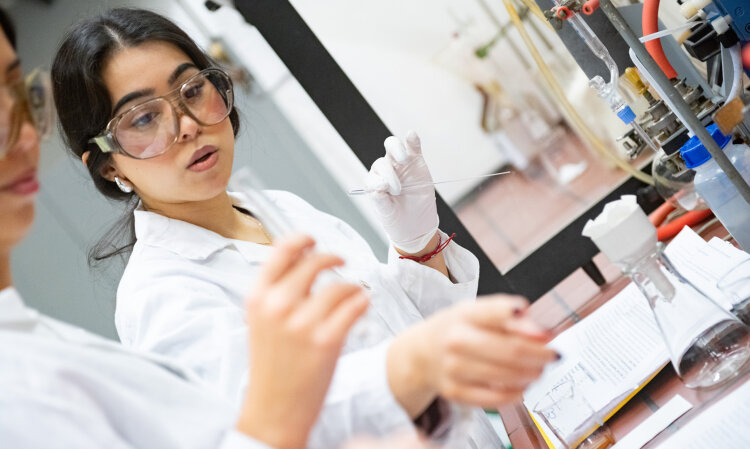
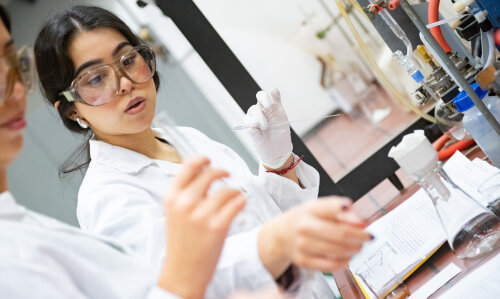
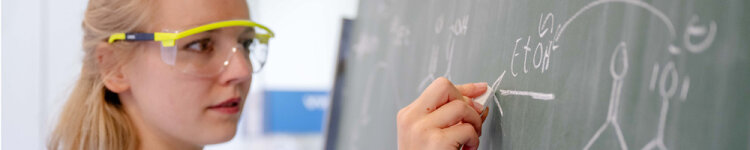
In diesem Praktikum wird apparatives und praktisches Verständnis der Grundoperationen der organischen Synthese vermittelt. Bei den apparativen Methoden sind Destillation, Vakuumtechnik, Umgang mit kondensierten Gasen, Hydrierapparaturen, Ozonolyse, Säulen- und Dünnschicht- Chromatographie, analytische Grundoperationen, UV, IR, NMR hervorzuheben.
Kontakt OC-Grundpraktikum
Room:
NBCF 05/685
Phone: +49 234 32 -
25479
E-Mail
Modul Organisch - chemisches Grundpraktikum - 8 CP
Modul Praxis der Organischen und Bioorganischen Chemie - 8 CP
In diesem Praktikum werden die Techniken der organischen Synthese erweitert durch aufwendigere, mehrstufige Präparate, sowie weitere Techniken wie Schutzgas-/Schlenktechnik erlernt. Dieses Praktikum führt auch tiefer in die Analyse von NMR-Spektren ein. Vorrangiges Ziel des F-Praktikums ist das Vermitteln von modernen Synthese- und Analsysenmethoden in der Organischen Molekülchemie. So werden die Präparate von den einzelnen Forschungsgruppen in das Praktikum gegeben, sind also forschungsnah ausgesucht.
Kontakt OCF - Praktikum
Room:
NBCF 05/685
Phone: +49 234 32 -
25479
E-Mail
Kontakt Nebenfachpraktika
Room:
NC 5/128
Phone: +49 234 32 -
26238
Tel.:
25478
E-Mail
Contact Cross-Sectional Practical course, Part Organic Chemistry
Room:
NBCF 05/685
Phone: +49 234 32 -
25479
E-Mail
Contact Cross-Sectional Practical course, Part Organic Chemistry
Room:
NC 4/131
Phone: +49 234 32 -
24533
E-Mail
The Cross-sectional practical course is a practical course that is offered to new incoming Master's students at the beginning of their studies at our faculty.
The key aims of this practical course are:
The primary aim of the Cross Sectional Practical Course is to communicate preparative synthesis and analytical methods in inorganic, organic, physical and analytical chemistry. The techniques and skills will be acquired and reinforced in their diversity based on didactic and research problems. The Cross Sectional Practical Course is designed to provide a bridge to independent work in scientific projects in the context of further in depth practical courses. Participants will participate in two blocks of partial practical courses from the areas of physical chemistry, analytical and technical chemistry, inorganic and organic chemistry, as well as theoretical and computational chemistry.
After successful completion the practical is credited with 8CP.
more information on Moodle
Prof. Huber
Content: various organic syntheses, including ones under inert gas condition. Literature-known protocols and unpublished methods developped in the group. Compounds will be characterized by NMR and mass spectroscopy. Binding constants will be obtained via NMR and ITC titrations, and catalyst performance will be judged by optaining reaction kinetics on model reactions.
Prof. Huber
Content: various organic syntheses, including ones under inert gas condition. Literature-known protocols and unpublished methods developped in the group. Compounds will be characterized by NMR and mass spectroscopy. Binding constants will be obtained via NMR and ITC titrations, and catalyst performance will be judged by optaining reaction kinetics on model reactions.
Prof. Dyker
Prof. Dyker
Content: Synthesis of target molecules within the context of a current research project.
Prof. Merten
Content: Typical in-depth practicals involves the synthesis
of a chiral target molecular and its spectroscopic characterization from
both the experimental as well as the computational perspective. A focus
solely on synthesis or spectroscopy is also possible. We are flexible
and find a mixture that suits your interests.
Prof. Merten
Copyright © Organic Chemistry II 2026
Last update: Sep 02, 2026